



A loud call rings out from a tree. A flash of green and purple moves between flowers. Something tiny darts past your eyes before you can focus on it.
That loud call could be a white-cheeked barbet, sitting very still but sounding like it has endless energy. The quick flash likely was a sunbird, stopping at a flower for just a second to drink nectar. And that tiny blur may be a flowerpecker, one of India’s smallest birds, often gone before you even realise it was there. This is just a tiny glimpse of our planet’s incredible avian diversity. About 11,000 bird species have reportedly been described so far, and India is home to about 1,300 of these.


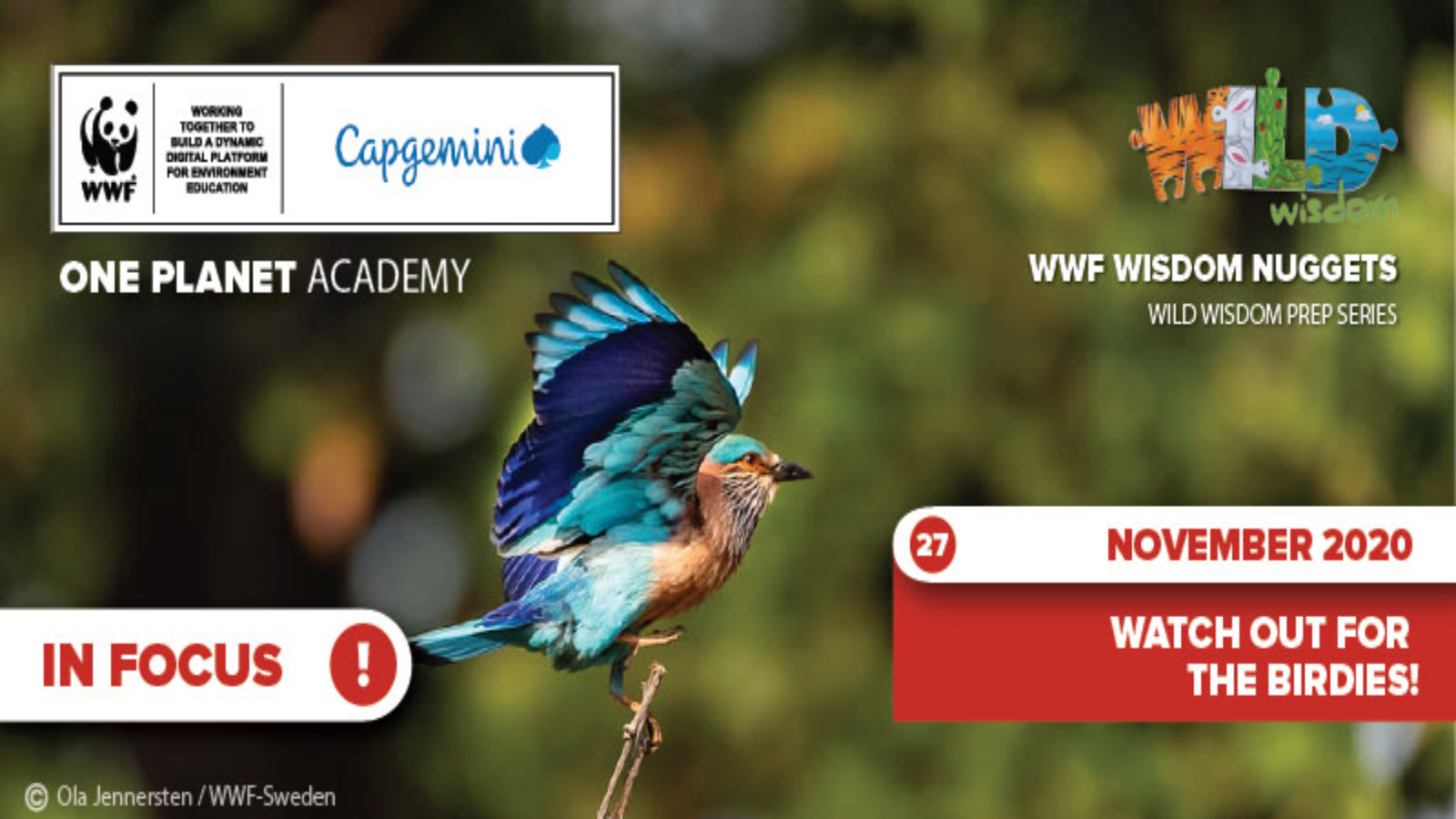
Across the planet, birds have adapted to diverse habitats including forests, wetlands, coasts, and even cities! This National Bird’s Day, let’s take a closer look at the incredible world of birds around us.
Lives of Birds
So what do birds do all day? Birds lead busy lives, and many of their behaviours are surprisingly complex. Every day involves finding food, avoiding danger, communicating, and raising their young.
Hornbills show one of the most unusual nesting behaviours among birds. When it is time to lay eggs, the female hornbill seals herself inside a hole in a tree using mud, fruit pulp, and droppings. Only a narrow opening is left. The male hornbill brings food to the nest every day until the chicks are ready to come out. This behaviour helps protect the eggs and chicks from predators.

Some birds are skilled builders. The baya weaver is an expert nest-maker. Males weave hanging nests from long strands of grass, knot by knot. They may build several nests at once, but only finish the one a female approves. If she rejects it, the bird simply starts again.

Others rely on clever tricks. Drongos are known as the tricksters of the bird world. By copying the alarm calls of other animals, they create confusion and steal food in the chaos that follows. These behaviors help birds live and survive in different environments and situations.
Bird Talk: Calls and Communication
Sound is one of the most important ways birds communicate with each other and understand their surroundings. A single bird can have different calls to warn of danger, attract mates, or defend territory. Some birds sing, while others use short calls or repeated sounds to send messages. These sounds are often so distinctive that people learn to recognise birds by their calls even before they see them.
For example, the Common Hawk-Cuckoo is often called the “brain fever bird” because its loud, repeating call sounds restless and urgent. The coppersmith barbet makes a steady metallic tapping sound that can be heard for long periods and hence the name. The red wattled lapwing sounds like it is accusing some with its call of “did he do it?, did he do it?”

The pied cuckoo, arrives in many parts of India just before the monsoon and is often recognised by both its call and its timing. And because its arrival coincides with seasonal rains, it holds a unique position in Indian stories and songs as a harbinger of rains.

Birds on the Move
Every year, lots of birds migrate to India crossing thousands of kilometers. When conditions become too harsh in their home regions, birds travel in search of food, shelter, and breeding grounds, and return home once the season changes.

Amur falcons stop in large numbers in the northeast on their 20,000 kilometer long journey from Northern China to South Africa! Check out this comic to learn how the amur falcons are celebrated when they stop in India during their long journey!
Can you imagine travelling thousands of kilometers every year without GPS or maps? Not all birds undertake such long journeys, many birds move much shorter distances, and some do not migrate at all. Migration depends on a bird’s species, habitat, and the seasons. Learn more about Migration here.
Birds in the Cities
While some birds travel thousands of kilometres, others have learned to live much closer to us, adapting to places shaped by people. House crows, common mynas, and rose-ringed parakeets have adapted to human presence with remarkable ease.

Pause for a moment and you’ll notice more. Our cities are alive with birdlife! Purple-rumped sunbirds dart between flowering plants, helping pollinate them, while black kites circle high above, keeping rodent populations in check. These birds show how deeply interconnected urban life and nature are! Check out this interactive resource to learn more about the birds around us!
Conservation
Birds are closely linked to the environments they live in, and shifts in forests, wetlands, grasslands, and coastlines are often reflected in the presence and absence of birds. Across India, habitat loss, pollution, climate change, poaching, and expanding infrastructure are making survival harder for many species. Protecting birds also means protecting the ecosystems they depend on.
Want to know more about these fascinating creatures? You don’t need to go far. Look out your window. Watch closely when you walk outside. A small patch of land, a roadside tree, or a nearby park can be full of birds.
Listen to their calls. Watch them fly, land, and move from place to place. The more you watch birds , the more you begin to understand them! Use this cool resource to get started!
Activity: Birds and States
We’re sure you know what India’s national bird is…that’s right, the Indian peafowl! But did you know that every Indian state and union territory has its own official bird?
Can you match the states below with their state birds?
| States | Birds |
| 1. Rajasthan | a. Great Indian Bustard |
| 2. Kerala | b. Indian Roller |
| 3. West Bengal | c. Greater Flamingo |
| 4. Gujarat | d. Great Hornbill |
| 5. Assam | e. White-throated Kingfisher |
| 6. Karnataka | f. White-winged Wood Duck |
Don’t see your state on the list? Don’t wait! Find out which bird represents your state and learn why it was chosen.
Answers: 1-a, 2-d, 3-e, 4-c, 5-f, 6-b







We’re a group of volunteers and opening a new scheme
in our community. Your web site provided us with valuable info
to work on. You’ve done an impressive job and our entire community will be thankful to you.
«Билайн» в Ульяновске предоставляют:
• пакет из 150+ ТВ каналов;
• бесплатный монтаж оборудования;
• Подбор оптимального тарифа под ваши задачи;
• Анализ возможности подключения по вашему адресу.
[url=https://ulyanovsk-beeline.ru/]проверка домашнего интернета билайн[/url]
интернет билайн тарифы для компьютера – [url=https://www.ulyanovsk-beeline.ru/]https://www.ulyanovsk-beeline.ru[/url]
[url=https://images.google.la/url?sa=t&url=https://ulyanovsk-beeline.ru/]https://www.google.lv/url?sa=t&url=https://ulyanovsk-beeline.ru/[/url]
[url=http://www2.saganet.ne.jp/cgi-bin/hatto/board/wwwboard.pl/www.pelsh.forum24.ru/dtcc.edu.vn/www.1xbet-10.com/www.frei-diplom13.ru]Домашний интернет и цифровое ТВ от «Билайн» в Ульяновске[/url] 49cb901
Way cool! Some extremely valid points! I appreciate you writing this write-up
and also the rest of the site is extremely good.
«Билайн» в Брянске предлагают:
• пакет из 150+ ТВ каналов;
• поддержки 24/7;
• Определение оптимального тарифа под ваши задачи;
• Анализ инфраструктуры по вашему адресу.
[url=https://bryansk-beeline.ru/]билайн тарифы на интернет и телевидение брянск[/url]
билайн домашний интернет и тв тарифы – [url=http://bryansk-beeline.ru]http://www.bryansk-beeline.ru/[/url]
[url=https://clients1.google.ms/url?sa=t&url=https://bryansk-beeline.ru/]https://www.google.com.sl/url?q=https://bryansk-beeline.ru/[/url]
[url=http://www.freifliegendehexe.de/viewtopic.php?f=18&t=1088&p=208635#p208635]Интернет и цифровое ТВ от «Билайн» в Брянске[/url] 791de49
Ищете надежный [url=https://avtomaticheskienozhi.ru]ножи складные автоматические выкидные[/url] — у нас широкий выбор моделей для охоты, туризма и повседневного ношения.
Надежность конструкции во многом зависит от качества материалов и точности сборки.
Experience an unforgettable night as [url=https://drones-show-0.com/]drone light show companies[/url] transforms the sky into a dazzling ballet of light and motion.
The technical coordination behind a drone show involves precise timing and reliable communication.
Improvements in LEDs and battery technology have broadened artistic options.
Regulations differ across countries and typically set altitude ceilings, restricted zones, and pilot certification requirements.
Event organizers often schedule shows to avoid sensitive wildlife periods and migratory paths.
Если вы или ваши близкие оказались в запое, не знаете, как вырваться из этого круга, обращайтесь за помощью на площадке [url=https://vivodizzapoya.asia]вывод из запоя наурызбайский район[/url].
Силы, позволяющие вернуться к нормальной жизни – это результат долгих трудов и упорствующих усилий.
Чтобы понять, как обратиться за помощью, нужно признать, что проблема существует. Пить при этом не перестаешь, но чувствуешь себя подавленно и обессилен. Иной раз человек, выпив, не перестаёт идти далее по жизни, но он чувствует себя подавленно и обессилен.
Алкогольные запои начинаются с легкого удовольствия от выпивки. Но со временем насилие над собой становится невозможно. Человек получает возможность избавиться от вреда от алкоголизма.
Навыки самодисциплины при этом необходимы, но при этом человек часто чувствует необходимость отказа. Тогда человек начинает поисков нового блага. Человек чувствует необходимость отказа от алкоголя, и в итоге он отказывается.
Существует множество методов лечения для алкогольной зависимости. Но все они требуют усилий и времени. Если нужно излечиться от алкогольной зависимости, то существует множество различных методов лечения, которые могут ему помочь.
Одним из наиболее эффективных методов лечения является групповая терапия. Групповая терапия помогает человеку понять, что он не одинок. Используя групповую терапию, человек поймет, что у него есть сила, и начнет свою жизнь с новыми задачами.
Поддержка семьи и друзей – это ключ к выздоровлению. Человек, получающий поддержку, более легко справляется с зависимостью от алкоголя. Включая семью и друзей в процесс выздоровления, человек становится более легко устойчивым и устойчивым в борьбе с алкогольной зависимостью.
Поддержка также может быть получена от специальных центров реабилитации. Программы реабилитации помогают человеку понять причину зависимости и найти пути к выздоровлению. Поддержка центра реабилитации позволяет человеку понять причину алкоголизма и найти пути к выздоровлению, таким образом он может получить реальную поддержку в стремлении к здоровью.
Merhaba! Son zamanlarda [url=https://betkomgiris.casino]betkom[/url] takip ediyorum ve harika. Siteye erisim icin [url=https://betkomgiris.casino]betkom guncel giris[/url] buraya bakabilirsiniz. Iyi sanslar!
Savjet dana bez komplikacija — https://www.heliosgravina.it/2026/03/01/sto-je-najbolje-jesti-navecer-navedeno-je-13-namirnica-za-dobar-san-2/
.
Uma solucao rapida para o cotidiano — https://www.galashop.cz/2026/03/04/qs-sao-as-macas-mais-saudaveis-os-nutricionistas-nomearam-5-variedades/
.
How to propose to a girl private proposal in Barcelona
How to propose to a girl proposal in Barcelona
Propose to a girl in winter unique proposal ideas in Barcelona
Proposed to a girl unique proposal ideas in Barcelona
How to propose to a girl https://propose.lol
Should I propose to a girl? proposal photographer in Barcelona
How to propose to a girl https://propose.lol
Where to propose to a girl unique proposal ideas in Barcelona
Where to propose to a girl proposal in Barcelona
Descopera o metoda practica pentru sarcini zilnice — https://www.makeupbrno.cz/2026/03/08/cum-sa-transformati-o-singura-tufa-de-busuioc-intr-o-padure-verde-fara-sfarsit-pe-pervazul-ferestrei-dvs/
.
Lifehack, který šetří čas i energii — https://www.centrumzdravichrudim.cz/2026/03/09/cervena-vs-zelena-odbornici-odpovedeli-ktera-paprika-je-zdravejsi-pro-zdravi/
.
Descubra uma forma pratica de resolver tarefas — https://www.galashop.cz/2026/03/08/o-segredo-dos-rabanetes-enormes-sem-fibras-duras-nem-flores-ocas/
.
Курьер нашёл адрес сразу, вручил аккуратно. Композиция стильная, Томск доволен!
заказ цветов томск
#Interests#
купить одноразовый номер
car hire spain barcelona https://drivelity-spain.com/car-rental-barcelona-spain
Awesome issues here. I am very happy to look your article. Thanks a lot and I’m looking forward to touch you. Will you please drop me a mail?
viagraonline
It’s perfect time to make some plans for the future and it’s time to be happy.
I’ve read this post and if I could I desire to suggest you some interesting things or suggestions.
Perhaps you can write next articles referring to this article.
I wish to read even more things about it!
Visit Ureyo – I stumbled upon this and it seems quite intriguing.
Explore here – Discovered this and it seems worth a closer look.
Visit platform – Came across this page and it looks really intriguing.
Try this page – Found this site and it seems surprisingly engaging.
Visit Ureyo – I stumbled upon this and it seems quite intriguing.
Browse this – Just found this and it looks interesting enough to explore.
Click to view – Ran into this site and it caught my attention.
Visit platform – Came across this page and it looks really intriguing.
learn more – Vibrant and distinctive design makes it feel fresh compared to typical sites.
this link – Just found it, looks like a friendly site for casual browsing.
click this – Found it recently, seems like a nice place to explore at leisure.
learn more – Just came across this page, feels inviting and easy to navigate.
check it out here – Found this page today, looks like a welcoming site for browsing.
tap here – The site gives off a calm vibe, making navigation pleasant.
click for details – The site offers a gentle browsing experience with a clean layout.
browse this page – Found a tranquil, easy-to-use interface while exploring.
explore the collection – Clean presentation ensures a calm and seamless user experience.
waveharborvault.shop – The site feels calm and well-organized, making browsing easy and pleasant.
store overview – The structure is simple and intuitive, allowing users to navigate comfortably.
explore the collection – Clean presentation ensures a calm and seamless user experience.
>browse around – Navigation is straightforward, making everything easy to find and enjoyable.
>see more details – The structure is straightforward, keeping the experience stress-free.
>click to view – Everything is arranged logically, making it easy to explore the pages.
>check more info – The design is neat and well-structured, giving a pleasant experience.
>visit the site – A clean design allows for a calm and pleasant browsing experience.
>browse this site – The site feels simple and tidy, making it easy to move between pages.
Everyday Shop – Organized pages and clean design simplify exploring products.
Daily Portal – Pages are neat and user-friendly, making exploring enjoyable.
Goods Store – Clean pages and intuitive navigation make finding items effortless.
Partnership Network – Clear pages and structured layout make exploring content effortless.
click to view shop – The overall presentation is tidy and easy to follow.
see more prints – The design is clean and helps make the browsing experience easy.
learn more here – The site layout is simple, and content feels well arranged.
official print store – The design is clean and keeps everything easy to find.
explore more – Easy-to-follow layout creates a smooth and enjoyable experience.
check this shop – Everything is presented neatly, providing a calm browsing experience.
reference link – Clean interface with easy-to-follow sections helps users browse efficiently.
learn more – Navigation is straightforward and the presentation is clear, making browsing enjoyable.
learn more – Navigation is straightforward and the presentation is clear, making browsing enjoyable.
click to view – The structure allows readers to follow information smoothly.
visit site – Organized pages allow content to be understood quickly and clearly.
Start Browsing Now – Logical layout ensures a smooth and enjoyable shopping flow.
Browse Vale Collections – Everything is neatly presented for easy access.
Visit Direction Hub – Smooth interface allows quick understanding of all content.
Open Feed Hub – Organized content makes learning and exploration simple.
explore knowledge – Clean layout makes understanding concepts straightforward.
explore knowledge – Clean layout makes understanding concepts straightforward.
explore knowledge – Clean layout makes understanding concepts straightforward.
take a look here – Well-structured content allows readers to grasp ideas quickly.
check out this store – Clean menus and smooth transitions make browsing enjoyable.
see what’s inside – The structure supports quick and easy navigation throughout.
see what’s inside – The structure supports quick and easy navigation throughout.
go to this page – Browsing feels effortless thanks to the organized setup.
view this platform – The site flows smoothly and is easy to get around.
see what’s inside – The structure supports quick and easy navigation throughout.
check this site – Pages are well-organized, providing a seamless browsing experience.
check it out here – Pages load efficiently, and products are easy to browse.
explore here – Fast-loading pages and intuitive layout make exploring simple.
see this platform – Clear sections and intuitive layout make exploring content enjoyable.
this online hub – Well-structured design ensures smooth navigation throughout the site.
Potrebujete se prestehovat? stehovani nabytku Praha preprava nabytku, spotrebicu a osobnich veci. Baleni, demontaz a montaz nabytku, stehovaci sluzby a doprava. Spolehlivy servis, dostupne ceny a pecliva prace bez poskozeni.
view meadow items – Simple layout and bright design keep browsing enjoyable.